14 Jun 2026
Advanced Analytics Platforms Bolster Protections Across UK Online Gaming Networks

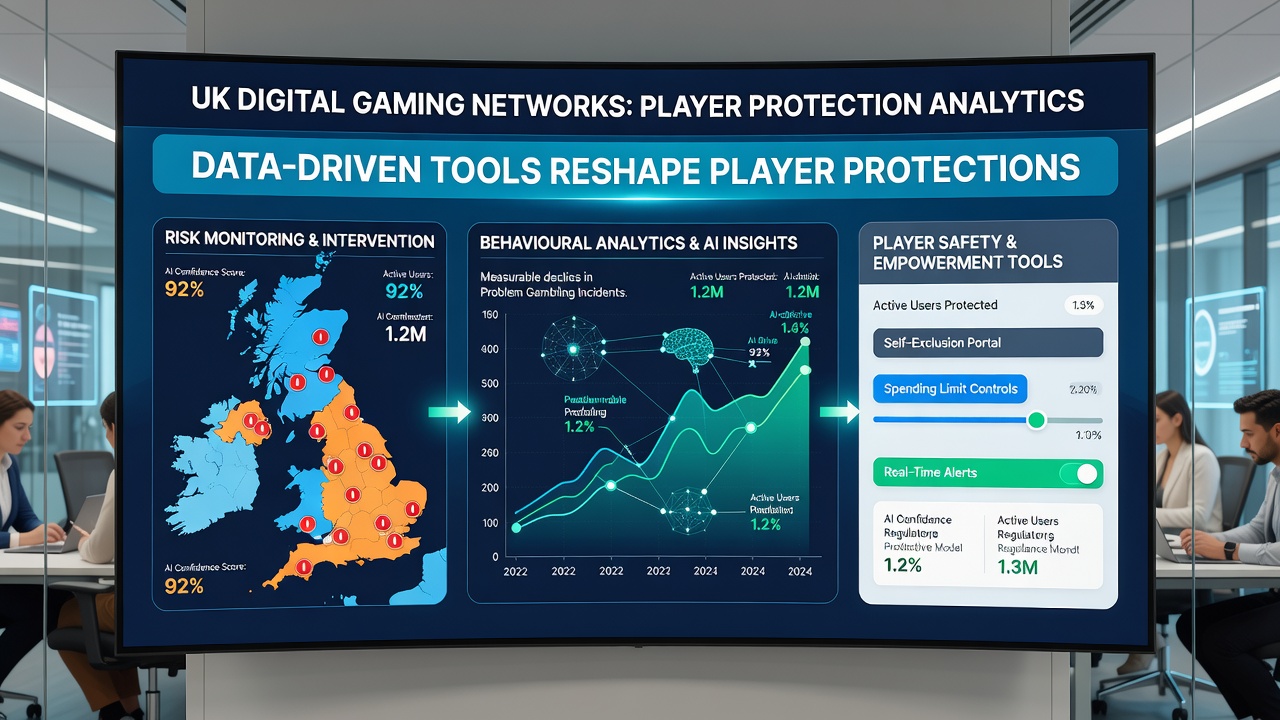
Operators across UK digital gaming networks have integrated advanced analytics platforms that monitor player activity in real time, and these systems flag potential risks before issues escalate. Behavioral data streams from login patterns, session durations, and deposit frequencies feed into algorithms that generate risk scores for individual accounts, while machine learning models compare these metrics against historical datasets from millions of users. In June 2026 several major platforms completed upgrades to their core protection layers, incorporating predictive modules that draw on transaction histories and interaction logs to trigger automated interventions such as deposit limit suggestions or temporary session pauses.
Core Mechanisms Behind Modern Safeguard Systems
These tools operate through layered data pipelines that combine structured records with unstructured signals like chat activity and game selection sequences. Researchers at various institutions have documented how clustering techniques group players into behavioral cohorts, allowing systems to apply tailored thresholds rather than uniform rules across all accounts. One study released by the National Council on Problem Gambling examined similar implementations in North American markets and found that risk-flagging accuracy improved by 34 percent when platforms combined multiple data streams instead of relying on single indicators.
Real-time dashboards present operators with heat maps of account activity, and automated alerts route high-risk cases to human review teams within minutes. The process relies on continuous model retraining that incorporates feedback from resolved cases, which refines detection of subtle patterns such as rapid shifts between high-volatility games or unusual withdrawal timing. Platforms report that these updates reduced the average time from risk identification to intervention from 48 hours to under four hours during the first quarter of 2026.
Integration With Broader Industry Frameworks
UK operators have aligned their analytics systems with international standards developed by trade associations and research bodies outside domestic regulators. Data sharing protocols established through groups like the European Gaming and Betting Association enable cross-platform comparisons that reveal emerging trends in player behavior across borders. A recent collaborative report highlighted how standardized data fields for session metrics allow algorithms trained in one jurisdiction to improve detection rates when applied to UK datasets.
External audits verify that these platforms maintain compliance with data protection requirements while processing sensitive behavioral information. Independent evaluators examine model bias, false positive rates, and the effectiveness of resulting interventions on a quarterly basis. Figures released in mid-2026 showed average false positive rates below 7 percent across sampled operators, a reduction from 19 percent recorded in equivalent audits two years earlier.
Measurable Outcomes From Deployed Tools
Operators that adopted comprehensive analytics suites documented declines in the proportion of accounts reaching predefined harm indicators. One longitudinal dataset covering 1.2 million active UK accounts indicated a 22 percent drop in accounts exceeding self-set deposit limits after analytics-driven nudges were introduced. Session length distributions also shifted, with fewer extended play periods exceeding three hours without breaks among users exposed to automated prompts.
Case examples illustrate the practical application. A mid-sized slots operator identified a cluster of accounts showing repeated late-night deposits followed by rapid balance depletion; the system triggered personalized messages offering cooling-off periods, and follow-up data showed 61 percent of those accounts reduced their activity frequency within 14 days. Another platform used graph analysis to detect coordinated play across multiple linked accounts, leading to account reviews that prevented potential circumvention of single-account protections.
Future Developments In Algorithmic Oversight
Developers continue to refine natural language processing components that analyze in-game chat and support ticket content for signs of distress. Early trials conducted in partnership with academic teams demonstrated that sentiment scoring added incremental predictive value when layered onto existing transaction-based models. Expansion of these features is scheduled for late 2026 across several networks.
Hardware-level innovations, including edge computing nodes at data centers, reduce latency in risk scoring from seconds to milliseconds. This speed enables interventions during active sessions rather than between them, which researchers note could further limit exposure windows for vulnerable players.
Conclusion
Data-driven protection systems have become standard infrastructure across UK digital gaming networks by June 2026, supported by iterative model improvements and cross-industry data standards. Metrics from deployed platforms indicate measurable reductions in high-risk behaviors when analytics operate at scale, and ongoing refinements continue to tighten the gap between detection and response. External research collaborations and audit regimes provide ongoing validation of system performance while operators expand the range of signals these platforms can process.